AI images for business: what is allowed and what actually works
Where AI images genuinely beat stock photography, where they destroy trust, and what the rules are.
In short
- AI images are excellent for backgrounds, metaphors and early concept work.
- For people, premises and products, use real photographs. No exceptions.
- Faces nobody recognises destroy trust faster than anything else.
- Copyright is unsettled in many places. Do not build a brand on an image you may not own.
- Label images where it matters. Honesty costs nothing and builds trust.
We use AI for images every day and we do not hide it. The images at the top of these articles are made that way. But there are places where they belong and places where they wreck more than they add.
Where they work
- Backgrounds, textures and abstract imagery.
- Metaphors for articles and content, where nobody expects the image to show a real thing.
- Concept work and rough drafts before you book a photographer.
- Illustration, where the style is obviously an illustration and not a photograph.
Where they do damage
- People. Faces nobody recognises are obvious immediately, especially on an Icelandic site where everyone knows everyone.
- Your premises, your workshop, your shop. People turn up in person and see the difference.
- The products you sell. This is misleading on top of everything else, and it can be illegal.
- Work you claim to have done. That is simply untrue.
Copyright and where the law stands
The picture is still forming and it is not the same everywhere. In many jurisdictions a work created entirely by a machine is not protected by copyright, which means you cannot stop anyone else from using the same image. For an illustration in an article that hardly matters. For your company logo it matters completely.
Our rule: never use an AI image you could not afford to lose. Logos, packaging and anything that becomes part of the brand should be designed by a person.
Labelling images
There is no general obligation in Iceland today to label AI images in marketing material, but it is basic courtesy wherever somebody might otherwise take the image as evidence. For an illustration in an article it is unnecessary. For an image that could be mistaken for a photograph of a real event it is essential.
How to get images that do not look like everyone else's
- Decide on an art direction first and hold to it across every image. Same materials, same lighting, same colour.
- Describe the material, the light and the angle, not just the subject.
- Ban text, faces and hands unless you need them. That is where most of the accidents happen.
- Look at every single image at full size before you use it.
- Throw away anything that is almost good. That is where the difference lives.
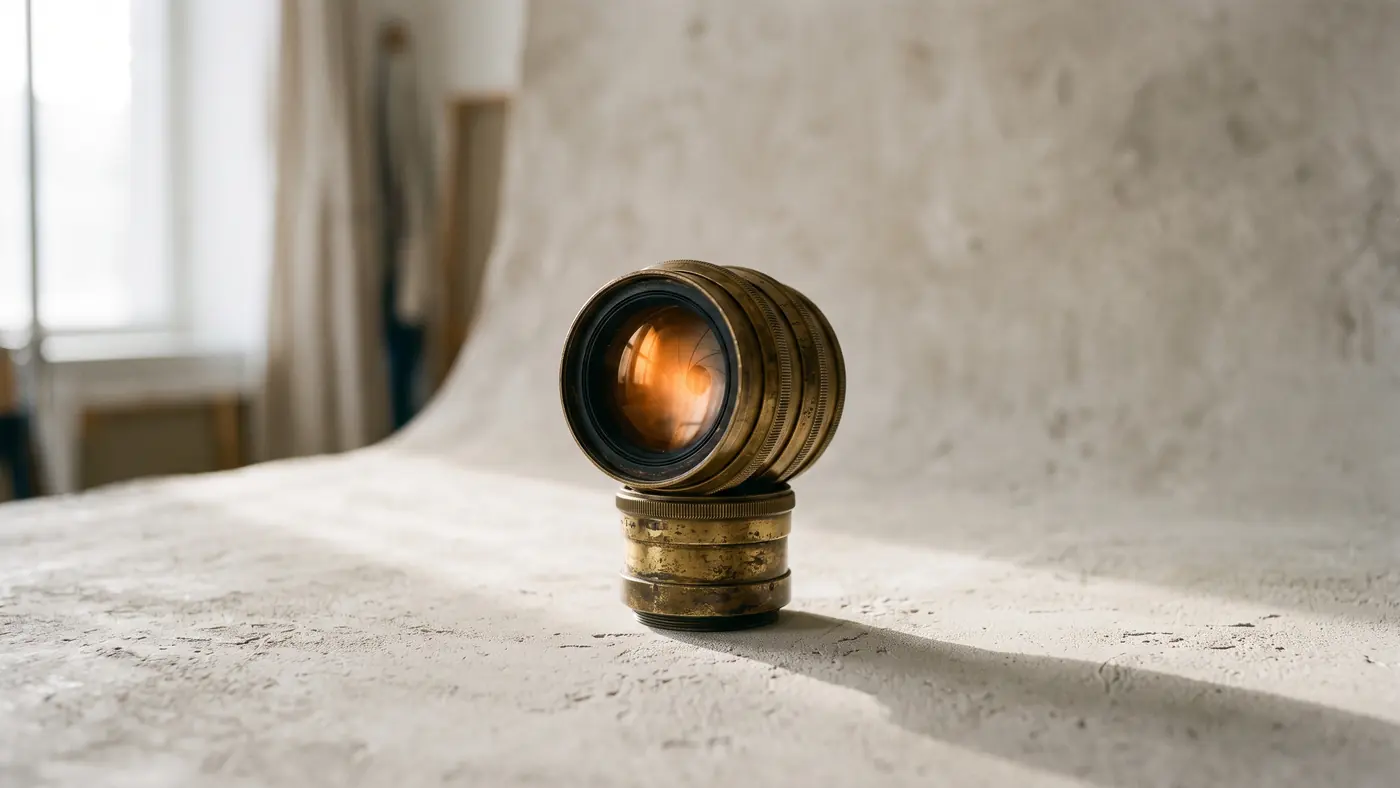
The images on our articles follow one rule: a single brass tool on a warm wall, one orange detail, the same light. That is why they look like a series and not like a collection.
Frequently asked questions
Can I use AI for staff photos?
No. Use a photographer, or even a good phone photo in daylight. Fake faces in a team lineup are the thing people forgive least.
Are stock photos better?
Not necessarily. They are real, but they are also on ten thousand other websites. For a metaphor, a well made AI image is often more distinctive.
Can you make the images for us?
Yes, that is part of Efnissmiðjan, our content service. We set an art direction for the brand and make images that belong together instead of a pile of coincidences.
Related service
Efnissmiðjan
This is the service this article relates to. Fixed price and a first draft within 48 hours.
See the serviceAI written text that does not sound like AI
What makes writing sound like a machine, how you fix it, and why it matters for trust and for sales.…
ReadHow often should you publish on your website?
A realistic cadence for a small business, and why updating old content often pays more than writing …
ReadReviews and trust: how to collect them and publish them properly
When to ask for a review, how to get people to actually answer, and how to publish reviews so they d…
ReadAbout the author
Kristján Gilbert is co-founder of galdrasmiðjan. He builds websites and online stores for Icelandic companies and writes here about what actually works: speed, search, visibility in AI answers and automation.
Questions about this article go to hallo@galdrasmidjan.is.
Want us to look at your site?
We take a short call, look at where things stand and tell you what is worth fixing first. It costs nothing.
Get a fixed quote